
There are actually several ways to restart a Solaris system. On one hand, there is what one might call the normal reboot. This is triggered with reboot -p. This reboot goes through the firmware respectively. Consequently, the reboot can also take a bit longer, if only because of the timeout in grub.
Then there is the so-called Fast Reboot.It’s triggered with reboot -f. In this case, the rebooting kernel loads the new kernel directly. This form of reboot does not go through the firmware (and also not through the timeout).Thus it’s potentially much faster, especially if the system goes through some kind of power-on self test. In this case you won’t see the firmware outputs.
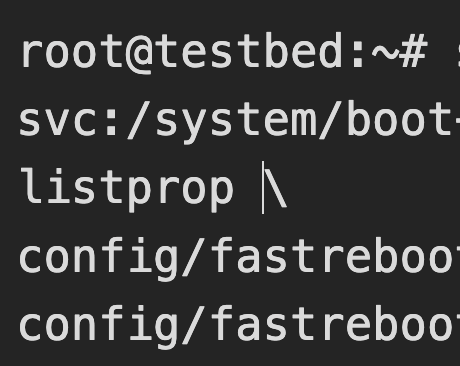
The default can be viewed in the SMF:
root@testbed:~# svccfg -s svc:/system/boot-config:default listprop config/fastreboot_default
config/fastreboot_default boolean true
So this system will default to fast reboot.
There are other reboot types but these two should be the two most relevant ones.